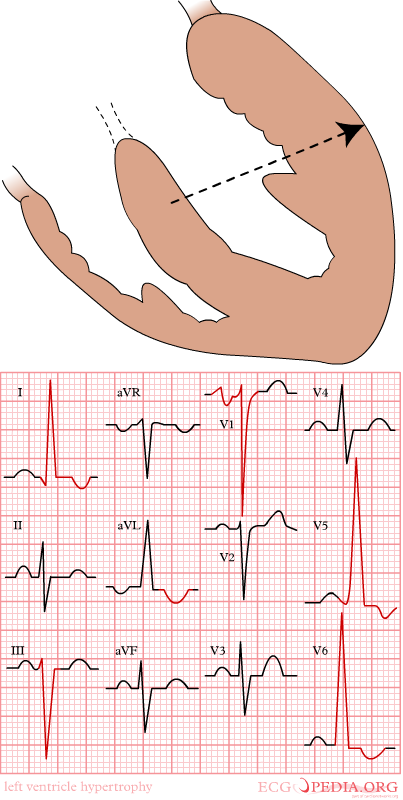
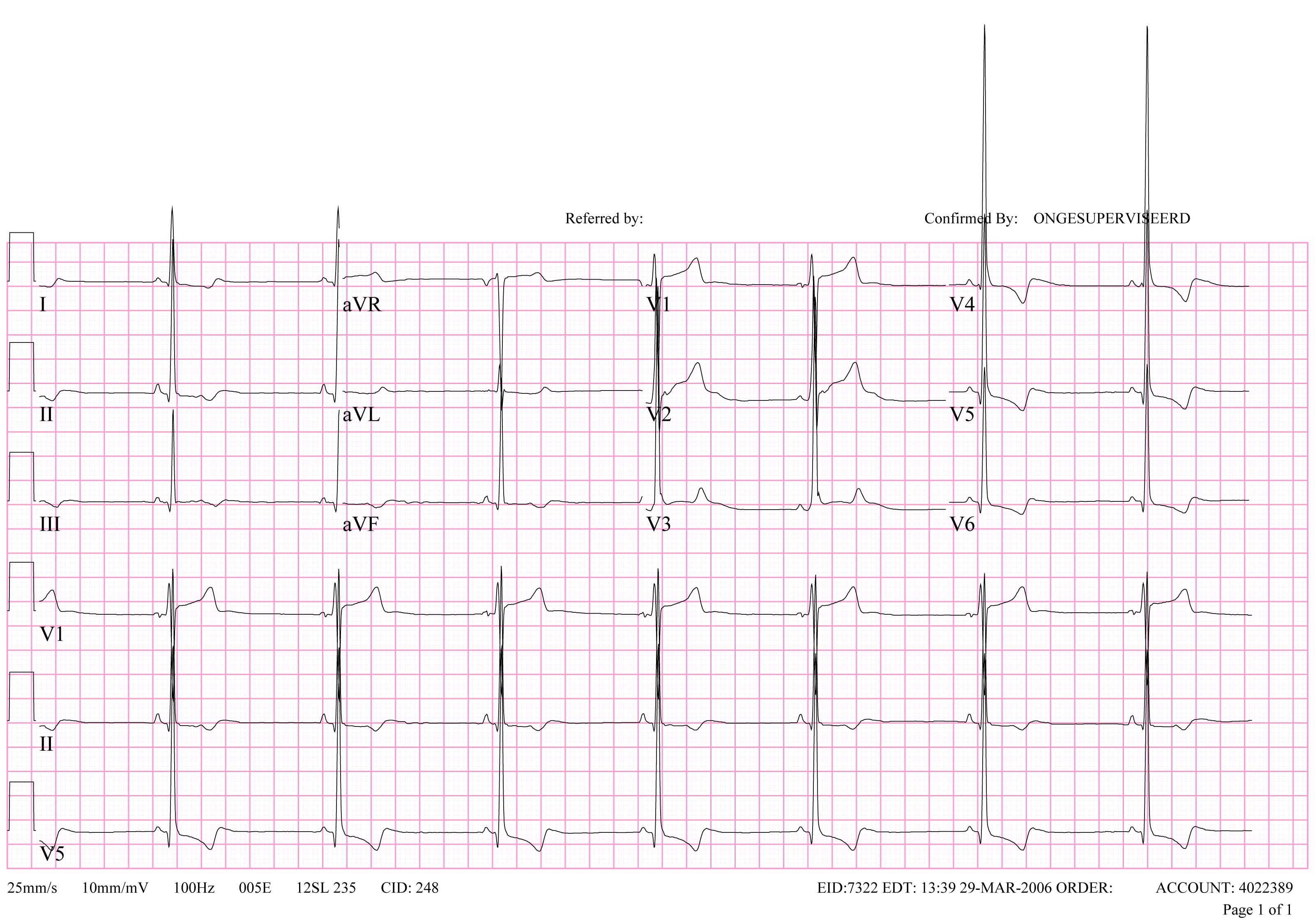
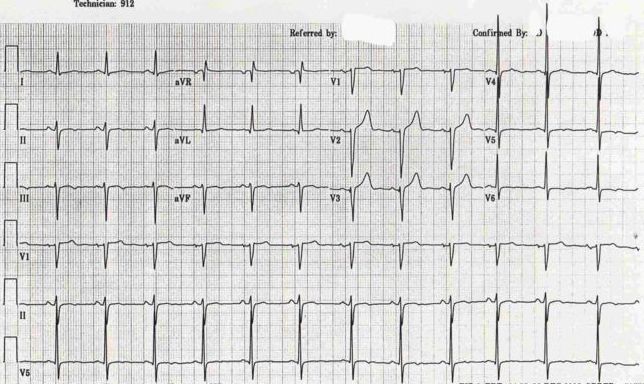
Electrocardiographic findings in left ventricular hypertrophy

You don't need to be Editor-In-Chief to add or edit content to WikiDoc. You can begin to add to or edit text on this WikiDoc page by clicking on the edit button at the top of this page. Next enter or edit the information that you would like to appear here. Once you are done editing, scroll down and click the Save page button at the bottom of the page.

Jump to: navigation, search
Electrocardiographic findings in left ventricular hypertrophy
Classification and external resources
eMedicine med/ 
MeSH [1]

WikiDoc Resources for

Electrocardiographic findings in left ventricular hypertrophy

Articles

Most recent articles on Electrocardiographic findings in left ventricular hypertrophy

Most cited articles on Electrocardiographic findings in left ventricular hypertrophy

Review articles on Electrocardiographic findings in left ventricular hypertrophy

Articles on Electrocardiographic findings in left ventricular hypertrophy in N Eng J Med, Lancet, BMJ

Media

Powerpoint slides on Electrocardiographic findings in left ventricular hypertrophy

Images of Electrocardiographic findings in left ventricular hypertrophy

Photos of Electrocardiographic findings in left ventricular hypertrophy

Podcasts & MP3s on Electrocardiographic findings in left ventricular hypertrophy

Videos on Electrocardiographic findings in left ventricular hypertrophy

Evidence Based Medicine

Cochrane Collaboration on Electrocardiographic findings in left ventricular hypertrophy

Bandolier on Electrocardiographic findings in left ventricular hypertrophy

TRIP on Electrocardiographic findings in left ventricular hypertrophy

Clinical Trials

Ongoing Trials on Electrocardiographic findings in left ventricular hypertrophy at Clinical Trials.gov

Trial results on Electrocardiographic findings in left ventricular hypertrophy

Clinical Trials on Electrocardiographic findings in left ventricular hypertrophy at Google

Guidelines / Policies / Govt

US National Guidelines Clearinghouse on Electrocardiographic findings in left ventricular hypertrophy

NICE Guidance on Electrocardiographic findings in left ventricular hypertrophy

NHS PRODIGY Guidance

FDA on Electrocardiographic findings in left ventricular hypertrophy

CDC on Electrocardiographic findings in left ventricular hypertrophy

Books

Books on Electrocardiographic findings in left ventricular hypertrophy

News

Electrocardiographic findings in left ventricular hypertrophy in the news

Be alerted to news on Electrocardiographic findings in left ventricular hypertrophy

News trends on Electrocardiographic findings in left ventricular hypertrophy

Commentary

Blogs on Electrocardiographic findings in left ventricular hypertrophy

Definitions

Definitions of Electrocardiographic findings in left ventricular hypertrophy

Patient Resources / Community

Patient resources on Electrocardiographic findings in left ventricular hypertrophy

Discussion groups on Electrocardiographic findings in left ventricular hypertrophy

Patient Handouts on Electrocardiographic findings in left ventricular hypertrophy

Directions to Hospitals Treating Electrocardiographic findings in left ventricular hypertrophy

Risk calculators and risk factors for Electrocardiographic findings in left ventricular hypertrophy

Healthcare Provider Resources

Symptoms of Electrocardiographic findings in left ventricular hypertrophy

Causes & Risk Factors for Electrocardiographic findings in left ventricular hypertrophy

Diagnostic studies for Electrocardiographic findings in left ventricular hypertrophy

Treatment of Electrocardiographic findings in left ventricular hypertrophy

Continuing Medical Education (CME)

CME Programs on Electrocardiographic findings in left ventricular hypertrophy

International

Electrocardiographic findings in left ventricular hypertrophy en Espanol

Electrocardiographic findings in left ventricular hypertrophy en Francais

Business

Electrocardiographic findings in left ventricular hypertrophy in the Marketplace

Patents on Electrocardiographic findings in left ventricular hypertrophy

Experimental / Informatics

List of terms related to Electrocardiographic findings in left ventricular hypertrophy

Cardiology Network

Discuss Electrocardiographic findings in left ventricular hypertrophy further in the WikiDoc Cardiology Network
Adult Congenital
Biomarkers
Cardiac Rehabilitation
Congestive Heart Failure
CT Angiography
Echocardiography
Electrophysiology
Cardiology General
Genetics
Health Economics
Hypertension
Interventional Cardiology
MRI
Nuclear Cardiology
Peripheral Arterial Disease
Prevention
Public Policy
Pulmonary Embolism
Stable Angina
Valvular Heart Disease
Vascular Medicine

Editor-In-Chief: C. Michael Gibson, M.S., M.D. [2] Phone:617-632-7753

Associate Editor-In-Chief: Cafer Zorkun, M.D., Ph.D. [3]

Please Join in Editing This Page and Apply to be an Editor-In-Chief for this topic: There can be one or more than one Editor-In-Chief. You may also apply to be an Associate Editor-In-Chief of one of the subtopics below. Please mail us [4] to indicate your interest in serving either as an Editor-In-Chief of the entire topic or as an Associate Editor-In-Chief for a subtopic. Please be sure to attach your CV and or biographical sketch.

Criteria For Left Ventricular Hypertrophy (LVH)

Sokolow and Lyon Criteria

  1. Add the depth of the S wave in V1 to the height of the R wave in lead V5 or V6 (whichever is taller) and if the sum is greater than 35 mm then LVH is present.
  2. This criterion correlates well with the thickness of the LV walls and the diameter of the LV cavity as determined by ECHO.
  3. Sensitivity 22% and specificity of 100%.[1]

Effects of LAHB on Diagnosing Acute myocardial infarction and left ventricular hypertrophy

LAHB may be a cause of poor R wave progression across the precordium causing a pseudoinfarction pattern mimicking an anteroseptal infarction. It also makes the electrocardiographic diagnosis of LVH more complicated, because both may cause a large R wave in lead aVL. Therefore to call LVH on an EKG in the setting of an LAHB you should see the presence of a “strain” pattern when you are relying on limb lead criteria to diagnose LVH.[2]

Cornell Voltage Criteria

  1. Add the height of the R wave in lead aVL to the depth of the S wave in lead V3.
  2. LVH if the sum is > 28mm in men or > 20 mm in women.
  3. Sensitivity of 42% and specificity of 96%.[3]

Roberts Criteria

  1. Add the QRS voltage in all 12 leads and LVH is present if the voltage exceeds 175 to 225 mm.[4]

Estes Criteria

  1. R or S in limb lead: 20 mm or more
    • S in V1, V2, or V3: 25 mm or more 3 points
    • R in V4, V5, or V6: 25 mm or more
  2. Any ST shift (without digitalis): 3 points
    • Typical "strain" ST T (with digitalis): 1 points
  3. LAD: 15 degrees or more: 2 points
  4. QRS interval: 0.09 seconds or more: 1 point
  5. Intrinsicoid deflection in V5 or V6 of 0.04 seconds or more: 1 point
  6. P terminal force in V1 more than 0.04 sec: 1 point

Total possible: 13 points

Total of 5 points = LVH, 4 points = probable LVH[5]

References

  1. Sokolow, M, and Lyon, T.P.: The Ventricular Complex As Obtained By Unipolar Limb Leads. Am. Heart J. 1949:37,161.
  2. Hammill S. C. Electrocardiographic diagnoses: Criteria and definitions of abnormalities, Chapter 18, MAYO Clinic, Concise Textbook of Cardiology, 3rd edition, 2007 ISBN 0-8493-9057-5
  3. Casale, P., Electrocardiographic detection of left ventricular hypertrophy: Development and prospective evaluation of improved criteria. J. Am. Coll Cardiol. 1985:6,572
  4. Roberts, W. and Podalak, M: The king of hearts: Analysis of 23 patients with hearts weighing 1,000 grams or more. Am J. Cardiol. 1985:55,485.
  5. Surawicz, B.: Electrocardiographic diagnosis of chamber enlargement. J. Am. Coll. Cardiol. 1986: 8,711.

Additional resources

Diagrams and EKG Findings


WikiDoc Help Menu

Quick Start..

Editing basics

Advanced editing

Communicating your edits

Help Videos You Can Watch

Acknowledgement and Attribution Regarding Sources of Content

Some of the initial content on this page may be incorporated in part from copyleft sources in the public domain including wikis such as Wikipedia and AskDrWiki. Drug information for patients came from the The National Library of Medicine. Infectious disease information may have come from the Centers for Disease Control (CDC). Differential Diagnoses are drawn from clinicians as well as an amalgamation of 3 sources: 1.The Disease Database; 2. Kahan, Scott, Smith, Ellen G. In A Page: Signs and Symptoms. Malden, Massachusetts: Blackwell Publishing, 2004:3; 3. Sailer, Christian, Wasner, Susanne. Differential Diagnosis Pocket. Hermosa Beach, CA: Borm Bruckmeir Publishing LLC, 2002:7 .